

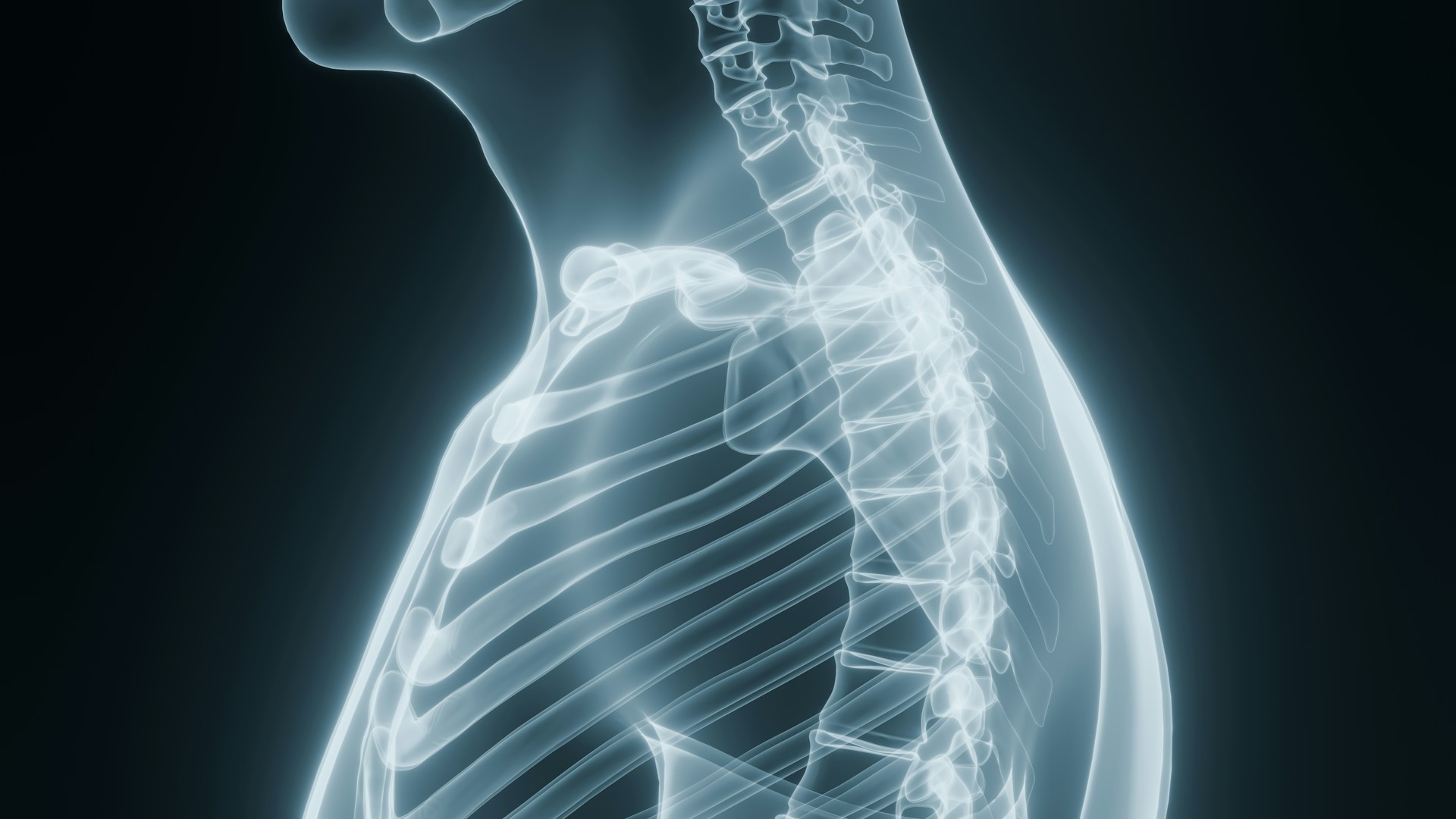
Early signs of bone health issues and osteoporosis often appear as neck and upper back pain during physical assessment.Bone health is one of the most overlooked areas of preventive care because bone loss happens quietly. By the time symptoms appear, damage has often already occurred. Understanding how and when to address bone health can make the difference between maintaining independence and facing long-term complications. The fracture is rarely the beginning of the problem. It is usually the moment the problem finally makes itself known.
Bones weaken gradually.
Unlike joints or muscles, they don’t ache as density declines. People don’t feel their bones thinning, and daily life continues unchanged—until a fracture happens.
This lack of early symptoms makes bone health easy to ignore. Many people assume osteoporosis is an inevitable part of aging or something that only affects others. Without routine screening, there is little to signal risk.
Cost uncertainty reinforces avoidance. Bone density scans are not always well understood, and people may hesitate to pursue testing when nothing feels wrong.
When osteoporosis reveals itself
Margaret didn’t think of herself as someone with fragile bones. She walked every day, carried groceries without trouble, and felt steady on her feet. When she slipped on an icy sidewalk and broke her wrist, it felt like bad luck more than anything else.

Follow-up testing revealed osteoporosis that had been developing silently for years. Nothing in her daily routine had warned her. The diagnosis arrived only after injury forced the issue.
Her experience is common. Many people who are diagnosed with osteoporosis only learn they were at risk after a fracture occurs.
What bone health screening actually does
Bone density screening identifies risk before fractures occur. A scan provides a snapshot of bone strength and allows providers to estimate fracture risk. This information guides prevention strategies tailored to individual needs.
Early detection does not always mean medication. Often, it leads to lifestyle adjustments, strength training, nutrition guidance, and monitoring. When treatment is recommended, it is typically more effective when started early.
Screening also establishes a baseline. Tracking changes over time allows care to evolve as risk changes.
Who is at risk
Bone loss affects both women and men, though risk increases with age. Hormonal changes, family history, certain medications, and chronic conditions all play a role. Lifestyle factors such as inactivity, smoking, and inadequate nutrition also contribute.
Many people who experience fractures do not realize they were at risk beforehand. That surprise is a common theme in osteoporosis diagnosis.
What happens when bone health is addressed early
Early attention to bone health supports stability and independence. Strength training improves balance and reduces fall risk. Nutritional support helps maintain bone density. When medication is appropriate, it can significantly reduce fracture risk.
Early care keeps options open. It allows people to take proactive steps rather than reacting to injury.
From a practical standpoint, early care often means fewer medical visits, shorter recovery times, and less disruption to daily life.
The consequences of late detection
When osteoporosis is identified after a fracture, care becomes more complex. Fractures—especially of the hip or spine—can lead to prolonged recovery, loss of mobility, and long-term dependence on others.

The emotional impact can be significant. Fear of falling may limit activity, leading to further deconditioning and increased risk of future fractures.
The broader cost of fractures
Fractures carry costs beyond medical treatment. Missed work, reduced mobility, and the need for assistance affect quality of life and financial stability. For older adults, fractures can be a turning point that reshapes living arrangements and long-term plans.
These outcomes are not inevitable. Many fractures associated with osteoporosis are preventable with early identification and intervention.
Many people delay screening because it doesn’t feel urgent. Without pain or limitation, it’s easy to assume everything is fine. Others worry that screening will lead to treatments they don’t want or costs they don’t understand.
Once someone has experienced surprise medical bills, hesitation becomes understandable. Bone health screening often falls into the category of care people mean to get to eventually—until eventually arrives too late.
Bone health across the lifespan
Bone health is not just an issue of older age. Peak bone density is built earlier in life, and habits formed decades earlier influence fracture risk later on. Preventive care adapts across life stages, supporting bone strength long before fragility becomes a concern.
Osteoporosis is expensive when it is discovered late. The most significant costs come not from screening or prevention, but from fractures and their aftermath. Early care reduces those costs by preserving mobility, independence, and confidence.
How Curaechoice supports preventive bone health care
One of the biggest barriers to bone health screening is hesitation driven by cost uncertainty.
Curaechoice helps reduce that hesitation by supporting access to preventive care without deductibles, copays, or coinsurance. When people can pursue screening and early intervention without worrying about surprise costs, they are more likely to address bone health before fractures occur.
Early bone care protects mobility, independence, and long-term well-being. When cost is no longer the barrier, prevention becomes part of routine health—not a response to injury.
Want to learn more about Curaechoice? Contact us.