

When James slipped on the back steps and twisted his knee, he assumed it was just a sprain.
A little ice, rest, and a compression bandage should have fixed it—but weeks later,
he was still limping. His doctor suggested an MRI to check for a ligament tear.
That’s when the questions started.
How much would it cost?
Would insurance cover it?
Should he go to a hospital or an imaging center?
For millions of Americans, getting an MRI isn’t just a medical decision—it’s a financial one
Curaechoice members face these same choices but without the guesswork.
The MRI, one of the most advanced diagnostic tools in modern medicine, is also one of the most expensive.
While unpredictable bills are the norm, Curaechoice makes it simple: access to necessary scans through our network at zero out-of-pocket cost. Understanding what MRIs do, how they’re priced, and what options exist helps members take the next step toward diagnosis confidently and without financial stress.
Learn About: Preventive Care and Early Detection Benefits
MRI stands for Magnetic Resonance Imaging
Using magnetic fields and radio waves, it produces detailed images of internal organs and soft tissues—things an X-ray or CT scan can’t show. It’s the gold standard for examining ligaments, tendons, muscles, brain tissue, and spinal discs.
Doctors order MRIs when they need clarity: to see whether a torn knee ligament needs surgery, whether nerve compression is causing back pain, or whether headaches might stem from sinus issues or something more serious. Unlike X-rays and CT scans, MRIs don’t expose patients to radiation.
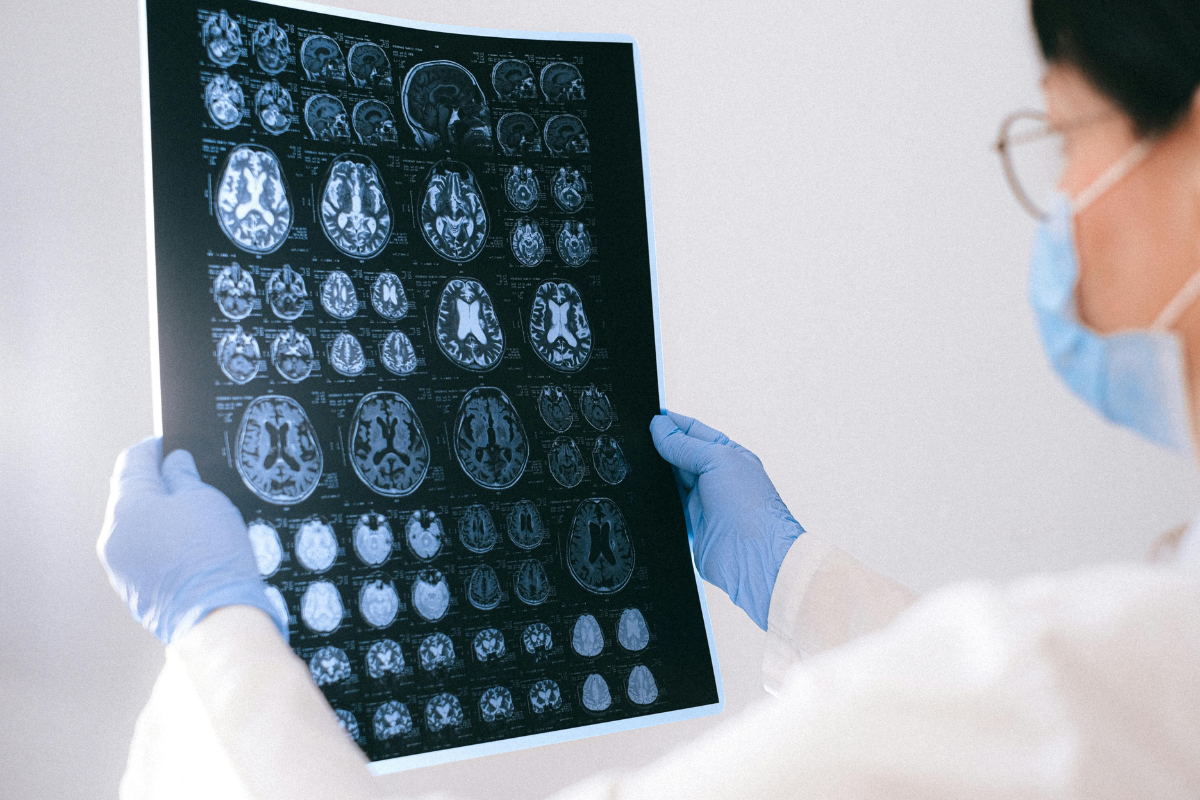
An MRI can feel intimidating if you’ve never had one.
The machine is a large circular magnet that surrounds the body while taking high-resolution images.
Most scans take 20 to 60 minutes. You’ll lie still on a table as the machine produces rhythmic, mechanical sounds. Some people choose an open MRI, which has more space and less confinement. Afterward, the images are read by a radiologist, and results go directly to your provider.
Prices for MRIs vary dramatically.
In one city, a knee scan might cost $500. Across town, the same scan could cost $2,000 or more.
The differences come down to a few key factors:
- Where the scan is performed—independent imaging centers are often far less expensive than hospitals
- Whether contrast dye is used, which adds materials and technician time
- The body part being scanned and the length of the procedure
- The strength and technology of the MRI machine itself
- How the scan is billed—through a network, cash-pay option, or standard insurance claim
Typical MRI costs range from $400 to $3,500 nationally. A brain MRI averages $1,600 to $3,000, a knee or shoulder scan $600 to $2,000, and an abdominal MRI $1,200 to $3,000. Adding contrast dye can raise the total by another $100 to $500. Hospitals tend to charge more because their pricing includes facility fees and interpretation charges, while independent centers often bundle everything into a single flat rate.
Without Curaechoice, MRI coverage usually depends on deductibles, copays, and prior authorizations. Even when a test is covered, patients can still receive bills weeks later for the facility or radiologist. Those costs can easily exceed $1,000 for someone who hasn’t met their deductible. Without insurance, many imaging centers now offer transparent pricing, where self-pay patients can expect to spend between $250 and $600 for a standard MRI if they book directly.
Check Out: Mental Health Therapy: Costs and Coverage
Curaechoice takes a different approach
By operating as a network of trusted imaging providers, it eliminates the unpredictable costs. Members receive necessary MRIs within the Curaechoice network at zero out-of-pocket cost, removing the anxiety that often keeps people from scheduling important tests. The pricing is clear from the start—no deductibles, no coinsurance, no surprise billing—and results are shared directly with the patient’s existing providers.
Members use the Curaechoice app to locate participating imaging centers and schedule at their convenience, knowing the cost is already handled through their network benefits.

The answer depends on the problem being studied. A CT scan, which uses X-rays, is faster and better for detecting bone injuries, chest issues, and internal bleeding. MRIs take longer but excel at showing soft tissues, nerves, and muscles in intricate detail. A CT might be chosen for an emergency evaluation, while an MRI is preferred for longer-term pain, neurological issues, or detailed orthopedic imaging. The two tests complement each other rather than compete. One reason people delay MRIs is fear of surprise costs.
To avoid that, it helps to ask a few questions in advance. Is the imaging center in your network? Does the quoted price include both the radiologist’s reading fee and the facility charge? Is the scan truly necessary, or could a different test provide the same information? Patients who take these steps often discover dramatic price differences between facilities—even in the same zip code.
Also Read: CT Scans: What They Examine — and What They Really Cost
For Curaechoice members, those questions are already answered

MRI technology continues to improve. New machines are faster, quieter, and more precise. Some allow upright or standing scans for patients who can’t tolerate lying flat. Artificial intelligence is being integrated into image analysis, speeding up interpretation and improving accuracy. These innovations mean shorter appointments, clearer images, and more precise diagnoses. Yet even as the technology advances, the challenge remains the same: patients deserve access to high-quality imaging without financial uncertainty.
With Curaechoice, they get exactly that.
Members can receive advanced imaging through a trusted network that prioritizes transparency and zero out-of-pocket costs. That clarity turns what might have been a stressful, expensive experience into a predictable part of a person’s healthcare journey—one that focuses on healing, not billing.
For more information on how MRIs work and when they’re used, visit the Mayo Clinic or read current imaging research from NIH PubMed.
Interested in learning more about Curaechoice? Contact us.