
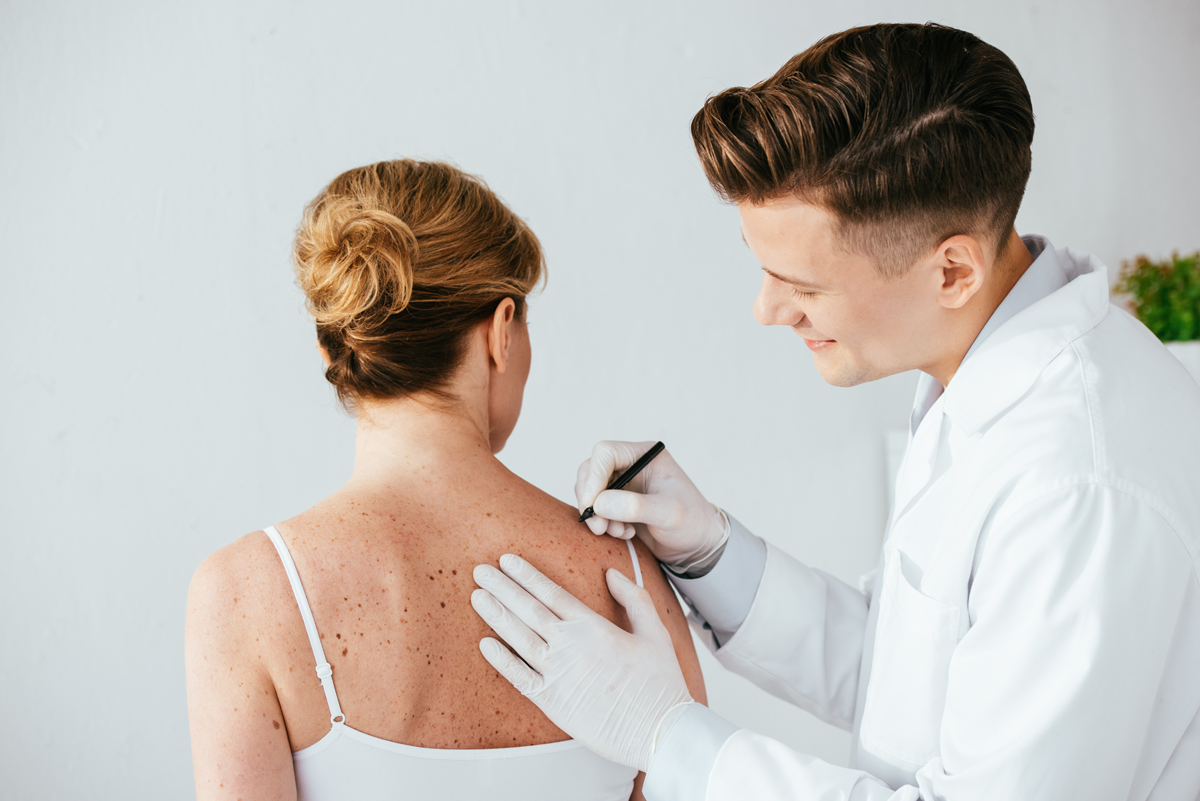
Every summer, before hitting the beach, people promise themselves they’ll finally get that mole checked.
But between busy schedules, the cost of specialist visits, and the uncertainty of coverage, routine skin exams often fall to the bottom of the list.
The result is that many cases of skin cancer are found late, when treatment is harder and more invasive. Early detection is the difference between a quick outpatient procedure and a long recovery — yet cost remains one of the main barriers to getting screened.
With more than five million new cases diagnosed in the U.S. every year, skin cancer is the most common form of cancer. The good news is that it’s also one of the most preventable and curable — if caught early. Understanding the types of skin cancer, when to seek evaluation, and how screening works can help people take control of their skin health before problems escalate.
Understanding Skin Cancer
Skin cancer occurs when abnormal cells in the skin begin to grow out of control.
Ultraviolet (UV) radiation from sunlight is the leading cause, but genetics, tanning bed use, and a history of sunburns all increase risk. The three main types of skin cancer are basal cell carcinoma, squamous cell carcinoma, and melanoma.
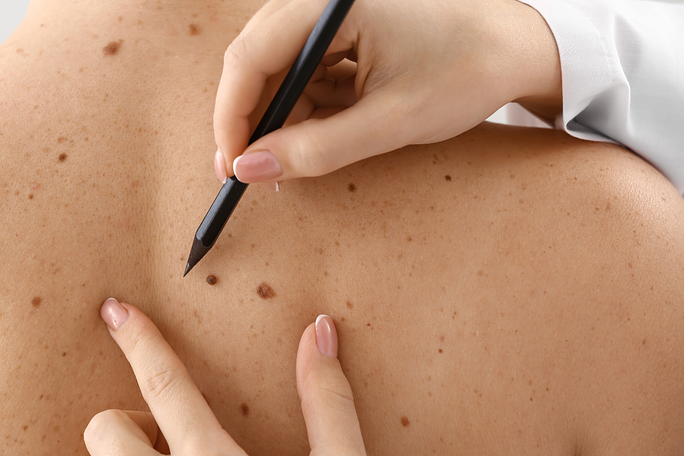
Squamous cell carcinoma may appear as a firm red bump, a crusted sore, or a scaly patch that doesn’t heal. Melanoma, though less common, is the most dangerous. It often develops from an existing mole and can spread quickly to other parts of the body.
People with fair skin, light hair, or a family history of melanoma face higher risks, but anyone can develop skin cancer — including those with darker skin tones. Regular self-checks and professional screenings are essential for everyone, regardless of age or complexion.
The Importance of Screening
Routine skin exams allow dermatologists to detect suspicious spots long before they cause symptoms. During an exam, the clinician examines the entire skin surface under good lighting, using a dermatoscope for closer inspection. If a mole or lesion appears irregular, the doctor may perform a small biopsy. It’s a simple, quick procedure performed under local anesthesia, and it’s the only way to confirm whether a lesion is cancerous.
Screenings are especially important for those with numerous moles, a history of blistering sunburns, or frequent outdoor exposure. Many dermatologists recommend yearly full-body exams, though those with higher risk factors may need them more often.

If a biopsy confirms skin cancer, treatment depends on the type, size, and location of the lesion. Most early-stage cancers are removed surgically in a dermatologist’s office. The most common methods include excision, cryotherapy (freezing), or electrodessication and curettage, which removes the cancerous tissue with minimal scarring. For deeper or more complex cases, Mohs surgery — a precise, layer-by-layer removal technique — ensures complete elimination while sparing healthy tissue.
Advanced melanomas may require immunotherapy, radiation, or targeted medication. These treatments can be life-saving, but they also highlight the importance of early detection: skin cancers caught in the earliest stage have a nearly 100 percent cure rate, while later-stage melanomas are much harder to treat effectively.
Beyond direct treatment, dermatologists play a vital role in ongoing care. They monitor previously affected areas for recurrence and track new or changing moles over time. This kind of vigilance is especially critical for patients with a personal or family history of skin cancer.
Protecting Your Skin
Preventing skin cancer begins long before the doctor’s visit.
Limiting sun exposure, wearing broad-spectrum SPF 30 or higher sunscreen daily, and avoiding tanning beds all dramatically reduce risk. Many dermatologists advise adopting the “shadow rule”: if your shadow is shorter than you are, the sun’s rays are strongest — and it’s time to seek shade.

Self-examination also helps.
Once a month, take a few minutes to check your entire body, including less-visible areas like the scalp, back, and soles of the feet. Look for new moles or changes to existing ones. The ABCDE rule — Asymmetry, Border irregularity, Color variation, Diameter over 6mm, and Evolving shape or texture — remains one of the most reliable tools for identifying suspicious spots early.Once a month, take a few minutes to check your entire body, including less-visible areas like the scalp, back, and soles of the feet. Look for new moles or changes to existing ones. The ABCDE rule — Asymmetry, Border irregularity, Color variation, Diameter over 6mm, and Evolving shape or texture — remains one of the most reliable tools for identifying suspicious spots early.
- Use broad-spectrum sunscreen with UVA and UVB protection
- Reapply sunscreen every two hours when outdoors
- Wear wide-brimmed hats and protective clothing
- Seek shade during peak sun hours (10 a.m. to 4 p.m.)
- Perform monthly self-checks and note any changes
These simple habits, combined with professional skin exams, create a strong defense against the most common forms of cancer.
Learn About: Inflammatory Breast Cancer Symptoms
Dermatology and Skin Cancer Coverage Through Curaechoice
For many employees, seeing a dermatologist can feel like a luxury — something only scheduled after a visible concern appears.
Most plans often requires meeting high deductibles before specialist visits are covered, leaving patients with unpredictable costs for even basic screenings. Curaechoice eliminates those barriers.
Through the Curaechoice network, members can access dermatology services and skin cancer screenings at zero out-of-pocket cost.

Employers benefit from this model as well.
By removing cost barriers, Curaechoice encourages early detection and proactive care, which significantly reduces the need for complex, high-cost treatments later. Employees receive peace of mind, and employers gain healthier, more engaged teams.
Check Out: CT Scans: What They Examine
Hypothetical Member Story
Consider Robert, a 52-year-old who spends most weekends outdoors coaching his daughter’s soccer team. After noticing a small, irregular mole on his shoulder, he hesitates to schedule a dermatologist visit, recalling a costly out-of-network experience years before. But through his company’s Curaechoice plan, the process is different. He books an appointment through the Curaechoice app, visits an in-network dermatologist, and receives a same-day biopsy. The results confirm an early basal cell carcinoma.
The lesion is removed in a quick outpatient procedure, and Robert pays nothing out of pocket. Within a week, he’s back on the field — a little more careful with sunscreen, but relieved he acted in time.
His story is hypothetical, but it mirrors what Curaechoice makes possible: timely care, early intervention, and zero financial stress. By giving members access to essential dermatology services without cost barriers, Curaechoice turns prevention into empowerment — and that can change lives.
Want to know more about Curaechoice? Contact us.