

Bringing a baby into the world should be a moment of pure joy—not financial dread.
But in the United States, too many parents-to-be find themselves bracing not just for labor pains, but for the bills.
And the stress doesn’t end in the delivery room.
Even with insurance, families face a tangled mess of fees, gaps in coverage, and bills that show up like bad surprises. From the first prenatal visit to postpartum checkups, the system is fragmented, confusing, and far more expensive than most expect.
It’s one of the best-kept secrets of American healthcare: Pregnancy is often a family’s first crash course in how broken medical billing really is. And it’s personal—because when you're expecting a child, the last thing you should be worrying about is whether you can afford to give birth.
Why Family Birth Care Costs Have Spiraled
Hospital delivery pricing has nearly doubled over the past two decades.
A routine birth now averages between $12,000 and $20,000, while a cesarean section typically runs well over $25,000. These figures exclude prenatal appointments, testing, anesthesia, newborn screenings, and postpartum recovery care. Even for insured patients, that can translate to several thousand dollars in out-of-pocket expenses.

Behind those totals lies a system that rewards volume over coordination. Each step of care—lab work, imaging, anesthesia, pediatric exams—is handled by a separate billing department, each with its own network rules and claim codes. Few families know what they’ll owe until months after they’ve gone home with their baby. This lack of transparency means people can’t plan, compare, or make informed decisions.
The result is financial instability layered onto one of life’s most emotional events.
For many, the bills arrive just as income dips during parental leave or recovery. Some hospitals require partial prepayment before delivery, forcing families to borrow or delay other essential expenses.
Where the Hidden Birth Care Costs Begin
What surprises most people isn’t the hospital fee itself but everything around it. A typical pregnancy involves at least a dozen medical visits, plus lab work, ultrasounds, and diagnostic screenings. Each may generate a separate bill, sometimes from third-party providers unaffiliated with the main hospital.
Common unexpected charges include:
- Imaging such as anatomy scans or growth ultrasounds performed at outside centers
- Anesthesiologist fees for epidurals or surgical procedures billed separately from hospital care Lab work, glucose testing, and genetic panels processed through independent laboratories
- Postpartum physical therapy, wound care, or lactation consultations not covered under a global maternity code
- Facility fees for labor and recovery rooms that are itemized individually rather than bundled
- None of these services are optional, yet their costs are often treated as extras.
Families who thought their provider’s estimate covered everything discover that it only included the obstetrician’s fee—not the dozens of others who contribute to care along the way.
Check Out: CT Scans: What They Examine
The Emotional and Economic Fallout
The financial strain of childbirth doesn’t end with discharge.
Studies link medical debt from maternity costs to delayed postpartum care, mental-health stress, and even reduced follow-up for infants. When money becomes the deciding factor in whether to schedule an appointment or refill a prescription, the consequences ripple far beyond the financial.

A Kaiser Family Foundation analysis found that nearly one in three new parents in the U.S. received a medical bill they didn’t expect within six months of giving birth. For families already stretched by the cost of housing, childcare, and time off work, this pattern can feel like quicksand—small charges adding up until the balance feels unmanageable.
How Curaechoice Redefines the Cost of Care
Curaechoice exists to take unpredictability out of the equation entirely.
Instead of stacking separate charges from multiple entities, Curaechoice partners directly with providers to deliver a single, coordinated care experience at no out-of-pocket cost to members.
There are no deductibles, copays, or coinsurance, and no separate bills from the anesthesiologist, imaging center, or lab.
The model is built around transparency and prevention.
Every stage of maternity and newborn care—prenatal visits, diagnostics, delivery, and postpartum recovery—is organized as one connected episode of care.
Curaechoice helps coordinate appointments, confirm coverage, and eliminate the red tape so families can focus on the health of mother and baby instead of paperwork.
For employers, the benefit goes beyond goodwill.
Maternity and neonatal care are among the top drivers of healthcare spending in employer-sponsored plans.
Fragmented care often leads to duplicated testing, unnecessary emergency interventions, and avoidable NICU admissions—all expensive outcomes that result from poor coordination. Curaechoice reduces those costs while improving health outcomes.
Learn About: Inflammatory Breast Cancer Symptoms
The Real-World Impact
Consider the hypothetical case of Mark and Jamie, two employees at a manufacturing company offering Curaechoice as part of its benefits package.
When they learned they were expecting, Curaechoice made it simple to schedule their prenatal appointments, including ultrasound, and delivery planning. Every bill was handled without out-of-pocket expense to the family.

When their baby arrived earlier than expected and needed a short NICU stay, the coverage didn’t change.
Curaechoice eliminated the weeks of calls and appeals that many families endure.
Beyond the Delivery Room
The Curaechoice approach doesn’t stop once the baby is home.
Members receive coverage for postpartum visits, physical therapy, and pediatric follow-up, all under the same network.
The continuity of care prevents the common handoff gaps that occur when a parent moves from obstetric to primary care or when newborns transition to pediatric specialists.
That continuity also supports long-term cost control.
Consider:
Early intervention for postpartum complications reduces emergency visits and rehospitalizations.
Coordinated newborn screening prevents unnecessary repeat testing.
Families remain in the care system rather than falling through its cracks.
What Predictable Care Really Means
In an industry where most billing is still reactive, Curaechoice is built on anticipation.
Every test, visit, and procedure is pre-cleared and pre-priced.
Families know exactly what’s covered before it happens, which means no surprise statements, no appeals, and no need to compare in-network versus out-of-network charges.
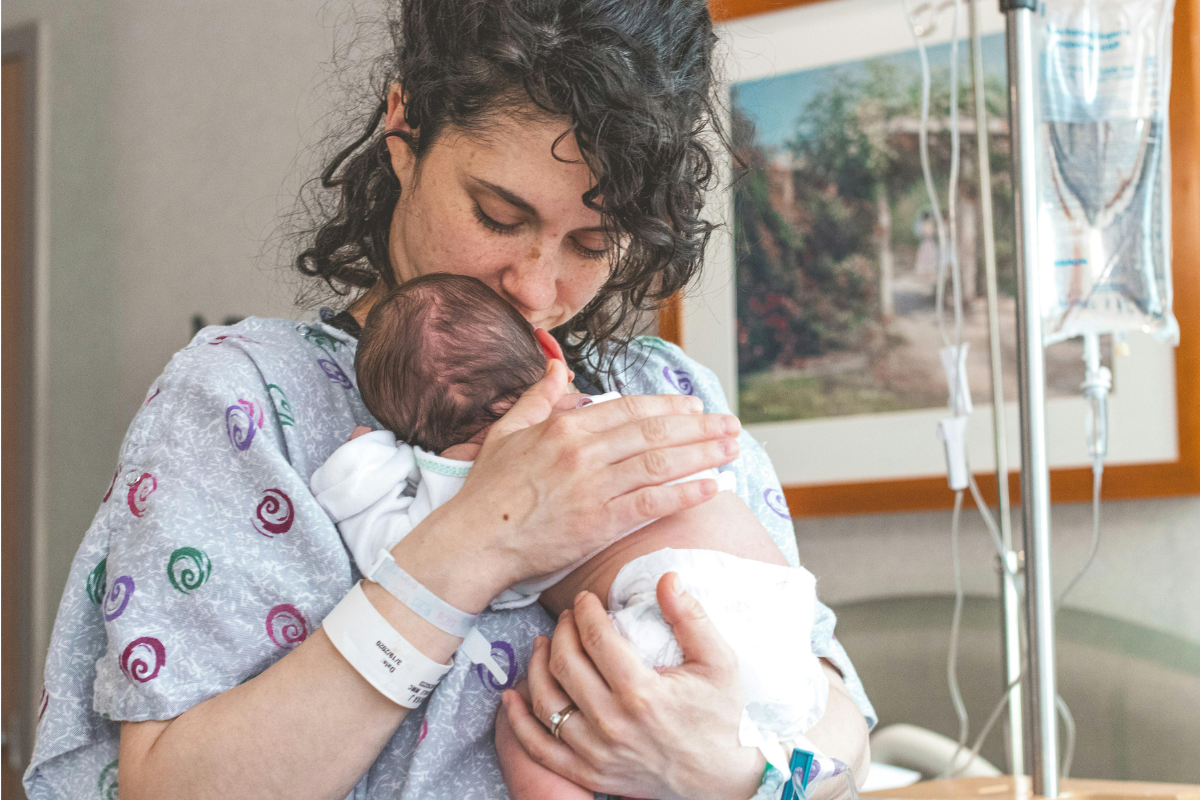
That predictability has an emotional dimension as well.
Financial stress during pregnancy is linked to higher rates of anxiety and delayed care. By removing cost uncertainty, Curaechoice helps families focus on wellness, recovery, and bonding—not on how to pay for it.
Families shouldn’t have to budget for childbirth as if it were a major purchase.
They should be able to plan for it like they plan for life itself—with confidence, clarity, and the assurance that cost will never dictate care. Curaechoice brings that assurance within reach, redefining what it means to give families a healthy start in every sense of the word.
Want to learn more about Curaechoice? Contact us.