

The short answer
MRI costs vary widely because hospitals and imaging centers operate under very different financial and administrative structures. Facility fees, insurance negotiations, operational overhead, and imaging technology all influence the final price patients receive.
Curaechoice enables access to covered diagnostic imaging, physician visits, specialist evaluations, and follow-up care at $0 out-of-pocket cost within the network, helping reduce delays caused by MRI cost uncertainty.
You're sitting in a physician's office. You've described the persistent pain in your lower back, or the knee that hasn't felt right since the fall, or the headaches that won't quit no matter what you take. Your doctor nods, types a few notes, and sends you for an MRI.
It seems straightforward. You'll lie in a machine for about 30 minutes. A radiologist will read the images. Someone will call you with results.
What doesn't feel straightforward is the bill that follows.
Check Out: Perimenopause Brain Fog: The Hidden Cost of Cognitive Changes Before Menopause
Two patients in the same city, with the same insurance, referred for the same scan of the same body part, can end up with bills that are thousands of dollars apart. One might pay $400. The other might pay $4,000 or more. Neither patient did anything differently. Neither received a meaningfully different scan. The gap between them has almost nothing to do with what actually happened inside the MRI machine—and almost everything to do with the financial architecture surrounding it.
This isn't a billing error. It's how the system is built.
The Scanner Is the Same. The Surrounding System Is Not.
A Johns Hopkins and Michigan State University study analyzing pricing data from approximately 2,000 U.S. hospitals found that commercial negotiated prices for common radiology services were 2 to 6 times higher than Medicare rates. An MRI of the brain before and after contrast had a median commercial price of $1,767—four times what Medicare would pay for the same scan. An MRI of the lower spinal canal carried a median commercial price of $1,311, nearly five times the Medicare rate.
To understand why, you have to understand what you're actually paying for when you get a hospital MRI—and how much of that bill has nothing to do with imaging.
Hospitals are enormously complex organizations. They operate emergency departments around the clock. They maintain surgical suites, inpatient units, trauma capabilities, and large administrative teams that handle billing, compliance, credentialing, and scheduling. Even when you walk into a hospital's outpatient imaging wing for a routine, scheduled MRI, the pricing structure you're subject to reflects part of the cost of maintaining that entire institutional infrastructure.
Independent imaging centers work differently. Their operations are narrow and specialized—MRI, CT, ultrasound, X-ray. No emergency department. No inpatient beds. No surgical services. Because their operational scope is tighter, their overhead is lower, and in most cases, that difference makes its way directly into lower prices for patients.
Learn More: Early Insulin Resistance in Non-Obese Adults: The Hidden Cost of “Normal Weight” Metabolic Disease
Importantly, lower cost does not mean lower quality. Many standalone imaging centers operate the same 1.5T or 3T MRI systems found in major hospital networks. Studies consistently show that scans are interpreted by board-certified radiologists with equivalent training and qualifications. The distinction is operational, not clinical.
The Hidden Bill Inside the Bill
For most patients, the most disorienting part of hospital MRI pricing isn't the total—it's discovering that the total is made up of multiple separate charges they never anticipated.

Hospital imaging typically generates two bills: a professional fee, which covers the radiologist's interpretation, and a facility fee, which covers the use of the hospital's outpatient system and its broader infrastructure. Patients often don't learn about this distinction until the explanation of benefits arrives weeks after the scan.
A 2025 analysis of commercial insurance pricing across four major insurers—Blue Cross Blue Shield, United, Cigna, and Aetna—found that facility fee variation was 3 to 6 times greater than professional fee variation. In other words, the radiologist's reading fee tends to be relatively consistent across providers. The facility fee is where pricing becomes almost entirely unpredictable.
Independent imaging centers may bill without the same facility fee structure, or with substantially reduced facility-related charges. This single difference can account for the majority of the price gap patients experience.
Insurance Contracts and the Prices You Never See
Here's the layer most patients never think about: your bill is also shaped by a private negotiation you had no part in and will likely never see.
MRI reimbursement rates are negotiated one-on-one between providers and insurers. Large hospital systems have significant leverage in those negotiations because insurers need them in-network to attract and retain members. That leverage often translates to higher contracted rates. Smaller independent imaging centers typically have less negotiating power and may accept lower reimbursement—which, counterintuitively, often benefits patients in the form of lower out-of-pocket costs.
The 2025 commercial pricing analysis found that facility prices across major insurers ranged from 31% to 85% above market average depending on the insurer and the hospital. Blue Cross Blue Shield consistently showed the highest payments across imaging categories. Cigna and Aetna generally came in below average. United showed a mixed pattern, with notably lower facility fees in some imaging categories.
You experience these negotiations as deductibles, coinsurance, and unexpected balances. A scan that appears "covered" can still generate a significant bill depending on where you are in your deductible cycle, what your plan's coinsurance rate is, and which facility fee structure applies.
Why Doctors May Not Know Either
One of the more surprising findings in medical research is how poorly informed physicians often are about imaging costs—and how little that has changed.
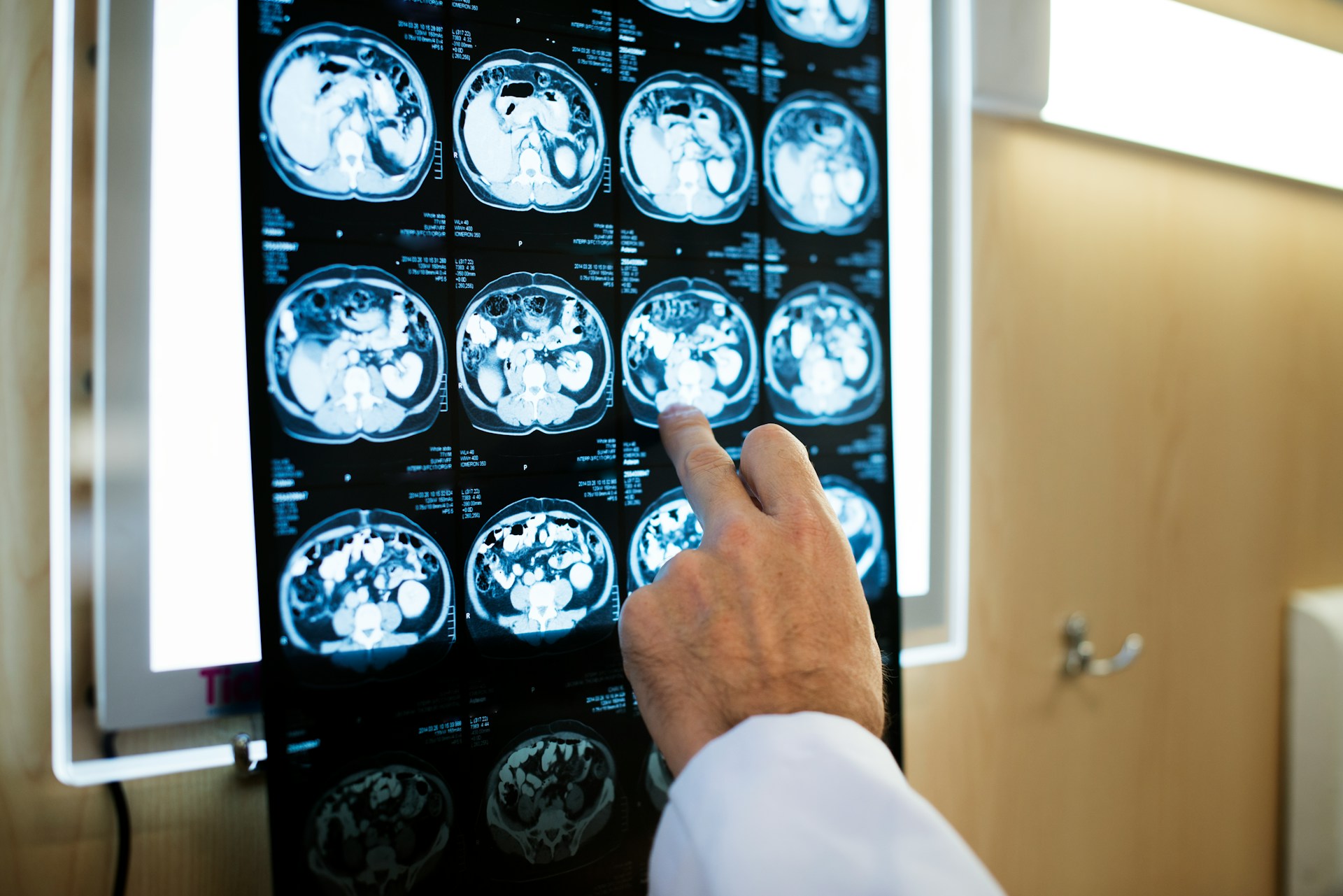
A study on Medicare reimbursement trends found that many ordering physicians still base their perceptions of MRI expense on rates from the 1980s and 1990s, when MRI was new and costs were substantially higher. Those mental models get passed down to trainees, who inherit outdated assumptions about what imaging costs without being corrected by current data.
Medicare reimbursement for MRI exams has actually declined dramatically—by approximately 77% when adjusted for inflation between 2003 and 2025. The perception of MRI as prohibitively expensive persists in the medical community even as the actual reimbursement landscape has shifted. This creates a situation where physicians may recommend watchful waiting or repeated symptomatic treatment not because it's clinically optimal, but because they've absorbed the old assumption that advanced imaging carries a cost burden it no longer necessarily carries.
What Happens When Patients Wait
The most consequential effect of MRI pricing uncertainty isn't the bill itself. It's the decision patients make before the scan ever happens.
A Harvard Medical School study analyzing more than 126,000 MRI orders found that nearly half of outpatient MRI requests were delayed, arriving more than 10 days past the ordering provider's expected delivery date. The study also found that patients from lower-income areas and those with public insurance plans were more likely to experience delays—populations who are often already managing higher baseline health risk.
Delay is not neutral.
When an MRI isn't obtained, the diagnostic process doesn't pause—it continues by other, less efficient means. Persistent back pain generates repeated office visits, medication trials, and physical therapy sessions. Neurological symptoms prompt specialist consultations without clear findings. Soft tissue injuries cycle through conservative treatment indefinitely while the underlying cause remains unconfirmed.
A 2024 study published in JAMA found that 23% of patients who were transferred to an ICU or died in the hospital had experienced a missed or delayed diagnosis. Of those diagnostic errors, 17% led to temporary or permanent patient harm. Critical imaging—including MRI—was identified as one of the most important missed steps in those cases.
When conditions are allowed to progress further before definitive evaluation occurs, the eventual cost of treatment rises. Longer recovery timelines, more complex interventions, and continued symptomatic management accumulate expenses that dwarf what early imaging would have cost.
The MRI may look expensive on the front end. Prolonged uncertainty is often more expensive across the entire arc of care.
Geography, Market Concentration, and What They Mean for Your Bill

If you live in a major metropolitan area dominated by one or two large health systems, you're more likely to face higher imaging prices. Market concentration in healthcare follows the same economics as any other industry—fewer competitors means less pricing pressure.
A 2025 analysis noted that pricing patterns significantly reflect negotiation strategies and market positioning. Urban markets with strong hospital consolidation tend to produce higher commercial imaging rates, while markets with robust competition from independent imaging centers show more price compression across the board.
The type of scan ordered also affects cost. A standard non-contrast MRI is generally the least expensive option. Contrast studies require additional materials, monitoring, and interpretation complexity. Neurological and cardiac imaging often involve specialized protocols and longer radiologist reading time. Multi-region scans multiply cost because both imaging duration and analysis become more complex.
The cost of waiting
Cost of MRI Imaging: Hospital Systems vs Independent Imaging Centers
- Cost with insurance$300–$3,500depending on deductibles, coinsurance, network agreements, and facility fees. Hospital-based imaging is often significantly more expensive than outpatient imaging centers
- Cost without insurance$400–$6,000or more depending on body region, contrast use, and facility type. Specialized hospital imaging studies are generally at the higher end of the range
- Cost with Curaechoice$0for covered physician visits, diagnostic imaging, specialist evaluations, and follow-up care within the Curaechoice network
How Curaechoice Helps
Curaechoice helps reduce delays in diagnosis by removing financial barriers to advanced imaging and specialist care. When patients can access covered MRI scans, physician visits, and follow-up evaluations at zero out-of-pocket cost within the network, clinicians can pursue targeted diagnosis earlier rather than relying on prolonged symptom management.
MRI pricing variation reflects the broader complexity of the healthcare system itself. The scan may be the same, but the structure surrounding it determines whether diagnosis happens efficiently or becomes delayed by cost uncertainty.
Frequently Asked Questions
1. Why are MRI scans more expensive at hospitals? Hospitals carry significantly higher operational overhead than standalone imaging centers. Facility fees also increase total charges.
2. Are imaging centers lower quality than hospitals? Not necessarily. Many imaging centers use the same MRI technology and radiologists as hospital systems.
3. What is a facility fee? It is a separate charge tied to use of a hospital outpatient system. This fee can substantially increase MRI pricing.
4. Why do MRI insurance costs vary so much? Insurance contracts are negotiated differently with each provider. Deductibles and coinsurance also affect patient responsibility.
5. Does MRI machine quality affect pricing? Sometimes. Advanced systems and specialized imaging capabilities may increase operational costs.
6. Why are patients surprised by MRI bills? Pricing is often not fully transparent beforehand. Additional charges may appear after insurance processing.
7. Can delaying an MRI increase healthcare costs later? Yes. Delayed diagnosis often leads to prolonged symptom management and repeated treatment attempts.
8. Why do standalone imaging centers often cost less? Their operations are narrower and more specialized. Lower institutional overhead reduces total pricing.
9. Are contrast MRIs more expensive? Yes. Contrast studies involve additional materials, monitoring, and interpretation complexity.
10. What is the biggest reason MRI prices vary so much? The healthcare system surrounding the scan. Operational structure and insurance negotiations often matter more than the imaging itself.
Key Specifications
Primary Issue: Significant MRI price variation between facilities
Cost Driver: Facility fees, insurance contracts, and operational overhead.
Clinical Impact: Delayed imaging and prolonged diagnostic timelines
Financial Impact: Highly variable out-of-pocket costs
Best Approach: Early price transparency and targeted imaging access
Expert summary
MRI scans demonstrate how healthcare pricing is shaped more by institutional structure than by the procedure itself. The same imaging study can produce dramatically different costs depending on where it is performed, how it is billed, and which insurance agreements apply.
The larger issue is uncertainty. When patients hesitate to pursue imaging because pricing is unclear or financially intimidating, diagnosis is often delayed and treatment becomes less efficient.
Curaechoice supports earlier diagnostic evaluation by providing access to physician visits, MRI imaging, specialist care, and follow-up services at $0 out-of-pocket cost within the network, helping reduce the prolonged costs associated with delayed diagnosis and fragmented care.
(Sources: Radiological Society of North America; Kaiser Family Foundation; Healthcare Bluebook)