It was a summer afternoon and Leland took his family to a friend’s pool. He had never been to this friend’s house before, and the shadows played tricks with the depth of the pool. “I thought the pool was deeper than what it was,” he says. He dove in headfirst. The pop he heard on impact was not the sound of water. “It was rough,” he says. “I heard a pop. I couldn’t move my neck for like two days.”
Imaging revealed no structural damage, and the acute stiffness eventually resolved.
But the pain remained and was persistent. “My middle and upper back hurts really bad all the time,” he says, “and that’s all since that happened.”
The grinding soreness has accompanied him ever since — through shifts on the production floor, through weekends coaching his son’s baseball team, through the particular physical demands of raising three daughters who cheerlead and do gymnastics. Through everything that requires him to move.
Leland is 32. He has been a Group Leader at his employer for just over a decade, responsible for roughly fifty people on the trim line — their schedules, their performance, everything that moves through his shift. It is not a desk job. When his back hurts, he feels it in everything. “Every time I’m really sore,” he says, “it’s hard to go through the motions.”
One bright note: The X-rays and imaging he needed after the pool incident were handled through Curaechoice, at zero cost. And results came back showing that he did not need surgery.
The lingering soreness was another matter.
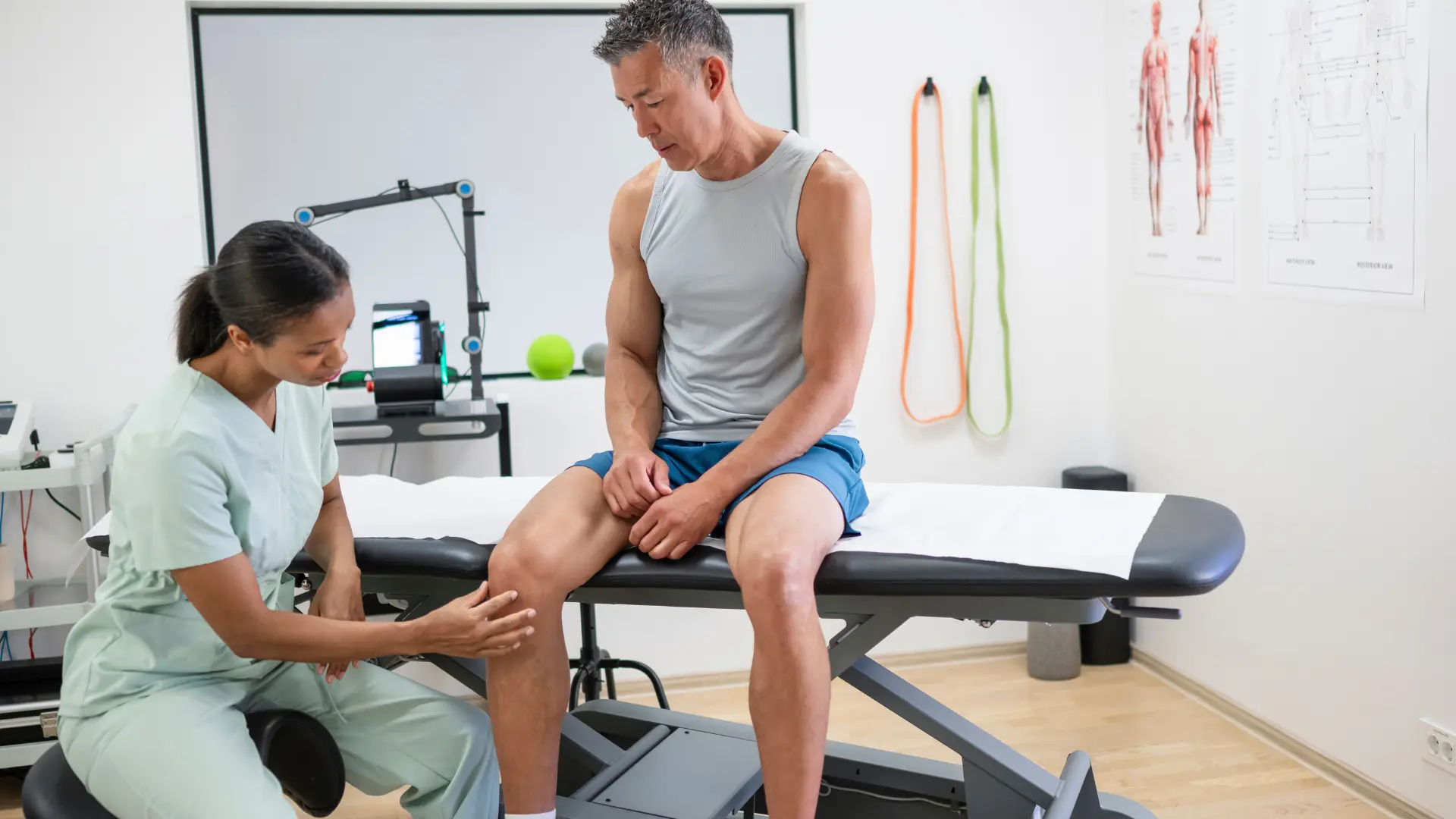
A coworker and close friend eventually offered a solution: he mentioned that the chiropractor down the road took Curaechoice, that he went twice a month, and that Leland ought to try it. Leland had been to a chiropractor before, years earlier, when a hip problem had sent him looking for relief. He knew what it could do. “You learn how your body tenses up,” he says, “how certain muscles and bones just shift over time. When I’ve gotten adjustments done I have felt better — my posture is better, I can move certain ways, I can stretch further.” He called and booked an appointment.
Having Curaechoice as a benefit is just extraordinary.
His wife has her own reasons for seeking chiropractic care.
After delivering twins, providers recommended it as part of her recovery, and the adjustments helped considerably. The lower back soreness that has returned in the years since is familiar territory, and she is ready to address it. What made booking the appointment straightforward was that neither of them had to think about cost. They looked up chiropractors in the Curaechoice network, found one nearby, and made the calls. No referral required. And zero copays to worry about.
This ease of use is what Leland returns to again and again when he describes two years with Curaechoice.

The family enrolled when Leland received an updated benefits package and saw the program listed among the offerings. He signed up, received the digital card immediately, and tested it almost at once when one of the children wasn’t feeling well. They looked up urgent care locations on the Curaechoice phone app, walked into the nearest one, and watched the staff scan the card on file. “You’re good to go.” That was the whole transaction. He has not paid a copay on anything in the two years since.
His wife sees her primary care physician once a month. She manages blood pressure and ADD, and her medications and monthly visits are covered in full — zero copays — through Curaechoice.
In fact all of the prescriptions — everything the family has needed since enrolling, for every member — have been covered at zero cost through their local pharmacy, which accepts Curaechoice without complication. When Leland needed medication after a visit to the on-site clinic at work, he took the prescription to the pharmacy, presented his Curaechoice card, and it was covered. Every time, without exception.
His wife also used the Curaechoice Vision program through a local optometrist, where she received a full eye exam and two pairs of lenses at no out-of-pocket cost. The family uses Curaechoice Dental for cleanings and routine care. Leland’s four children — a nine-year-old son, seven-year-old twins, and a three-year-old daughter — have needed only routine and urgent care so far, which is the best possible news, and all of it has been covered.
When Leland estimates what the family has saved, he puts the number between $5,000 and $8,000 over the life of the benefit — and that accounts only for what they’ve used, not what a comparable household paying standard copays, prescription costs, and vision and dental fees would have spent over the same period.
The money flows directly into the things a family of six with four active children actually needs. His daughters cheerlead. They do gymnastics. His son plays baseball, and Leland coaches. The registration fees, the equipment, the travel — none of it requires choosing between a doctor’s visit and a tournament entry fee, because the doctor’s visits are not costing what they used to.
In his role as Group Leader, Leland makes a point of telling his team about Curaechoice. He has run it through startup meetings, put QR codes in front of people at benefit fairs, and stopped colleagues in the hall when he heard them mention a health issue they’d been putting off. “If you don’t have this,” he tells them, “you need to go sign up for it.” The employees who haven’t enrolled, in his experience, tend to be in their twenties and healthy enough to feel invincible. “As you get older and have a family,” he says, “you realize how important doctors really are. Having that benefit is just extraordinary.”
“We’ve saved $5,000 to $8,000 in the time we’ve been using Curaechoice. That goes straight to the kids — their activities, their needs. It makes everything possible.”
Quick Answers
Spinal injuries from diving or impact trauma frequently require immediate imaging to rule out structural damage, with X-ray and advanced imaging costing $500 to $2,500 without coverage, per the American College of Radiology. Chronic soreness following resolved acute injury often benefits from ongoing chiropractic care, which without coverage runs $65 to $120 per session, per the American Chiropractic Association. Postpartum chiropractic care, increasingly recommended following delivery, follows similar per-session pricing. Curaechoice covers emergency imaging, ongoing chiropractic care, and family urgent care within the network at $0 out-of-pocket.