

Reading glasses feel like a clever shortcut.
They’re inexpensive, easy to grab, and instantly helpful. Many people keep a pair in the car, one at the office, and another by the couch. When text gets blurry, readers restore clarity in seconds. Problem solved—at least on the surface.
But reading glasses do not equal eye care. They correct a symptom, not the system. Over time, relying on readers alone can mask underlying issues that progress quietly, without pain or obvious warning. Vision changes often happen slowly, and the convenience of readers can delay the care that actually protects eyesight.
Understanding what readers do—and more importantly, what they don’t do—helps explain why comprehensive eye care matters and how Curaechoice makes that care accessible.
Learn About: Dental Health and Overall Health
Over-the-counter reading glasses are designed to address presbyopia, the natural age-related stiffening of the eye’s lens that makes close-up focus more difficult. They magnify text, reducing strain during near tasks like reading or phone use.
What they do not do is evaluate eye health.
Reading glasses don’t assess eye pressure, retinal integrity, macular health, or optic nerve function. They don’t detect glaucoma, macular degeneration, diabetic eye disease, or early cataracts. They don’t reveal nutritional deficiencies or vascular changes that can affect vision.
Readers improve comfort, but they provide no insight into whether the eyes themselves are healthy.

One reason people rely on readers is that many serious eye conditions develop without pain. Vision loss is gradual, and the brain adapts. People increase font size, avoid night driving, or hold reading material farther away. Because readers seem to work, care feels optional.
This delay can be costly. Glaucoma can damage vision irreversibly before symptoms appear. Macular degeneration often progresses silently. Diabetic eye disease may show no early warning signs at all. By the time vision changes are noticeable, intervention options may be more limited.
Reading glasses don’t cause these problems—but they can make it easier to ignore them.
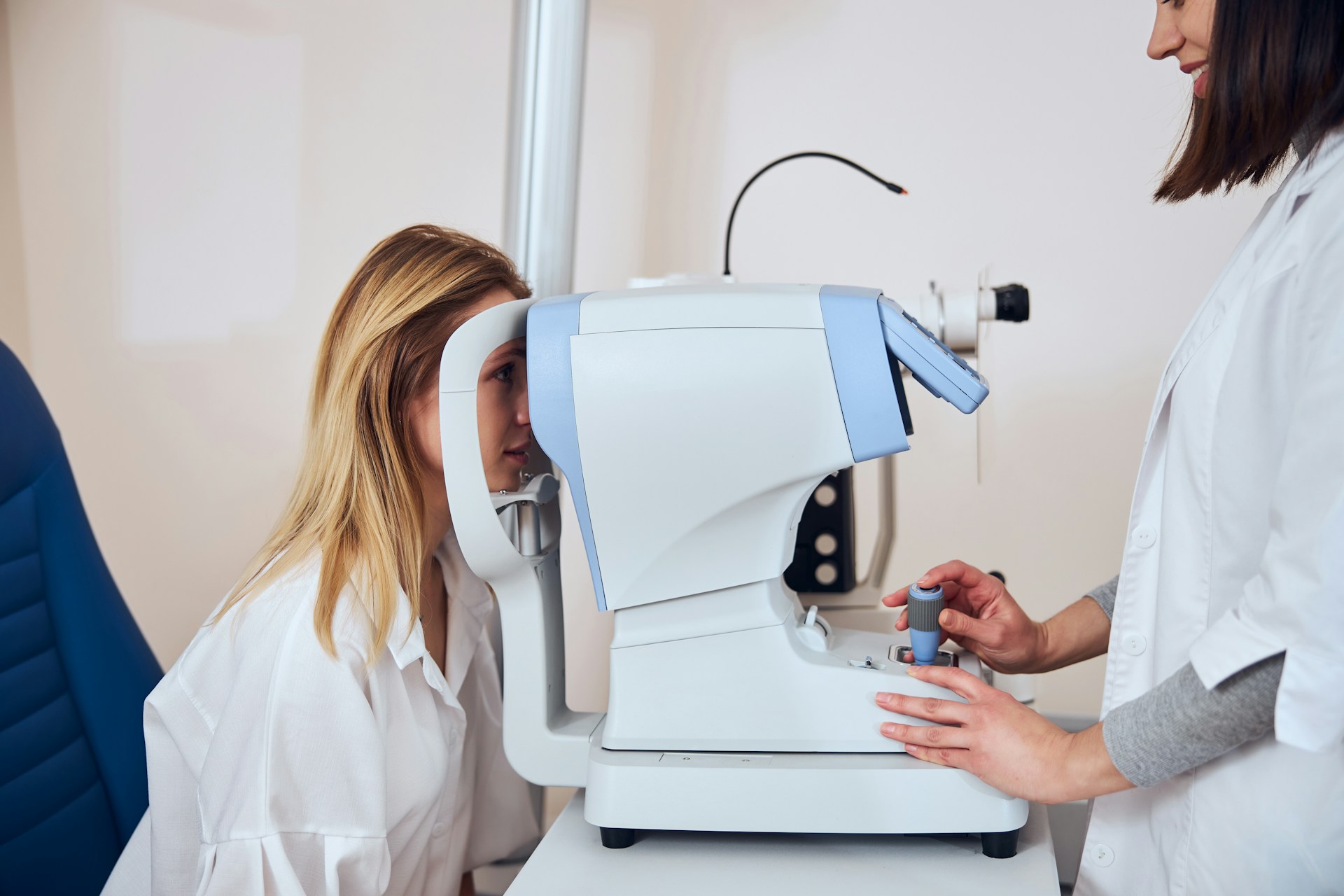
Comprehensive eye exams do far more than determine prescription strength.
Optometrists and ophthalmologists evaluate eye pressure, examine the retina, assess the optic nerve, and look for early signs of disease. These evaluations are essential even when eyesight feels adequate.
Eye exams also establish baselines. Changes over time matter, and without regular exams, subtle progression can go unnoticed. Nutrition, systemic health conditions, medications, and age all influence eye health. Professional care connects those factors in ways readers never can.
Many people assume that if reading glasses solve their immediate problem, additional care is unnecessary. This assumption overlooks the preventive role of routine exams. Eye care is not just about sharper vision today; it is about preserving function for decades.
The consequences of delayed eye care are rarely immediate. They accumulate quietly. A missed glaucoma diagnosis can result in irreversible vision loss. Undetected macular degeneration may progress to a stage where treatment can only slow, not restore, vision. Diabetic eye disease left unmonitored can lead to permanent impairment.
From a financial standpoint, these conditions carry significant long-term costs. Advanced eye disease often requires ongoing monitoring, specialized imaging, prescription medications, injections, laser treatments, or surgery. These interventions can extend over many years, creating sustained medical expense.
Also Read: Pediatric Preventive Care
Vision loss also produces indirect costs that are easy to overlook. Reduced driving ability may limit employment or independence. Increased fall risk can lead to injury and hospitalization. Assistive devices, home modifications, and caregiving needs may become necessary over time.
Routine eye exams and early detection are far less expensive than managing advanced disease. Identifying issues early allows for monitoring, lifestyle adjustments, and targeted treatment before damage becomes severe.
Curaechoice can help.
The Curaechoice Vision Program addresses one of the primary reasons people rely on readers alone: uncertainty around cost and access. When exams, follow-up visits, or corrective options feel unpredictable, people default to the easiest solution available.
Curaechoice removes that uncertainty by providing access to vision exams, preventive care, and treatment without deductibles, copays, or coinsurance. Members can choose convenient options such as Zenni for eyewear while still maintaining regular exams with local providers.
This combination allows people to address both comfort and clinical oversight. Readers can be used when appropriate, but they no longer replace comprehensive care.
Reading glasses have a place. They reduce strain and make daily tasks easier. But they are not a substitute for professional evaluation. Treating them as one can delay diagnosis, limit prevention, and increase long-term risk.
Curaechoice helps members move beyond “good enough” solutions and into sustainable vision health. When eye care is accessible and predictable, people are more likely to maintain routine exams, update prescriptions, and address issues early.
Clear sight isn’t just about reading words on a page. It is about preserving independence, safety, and quality of life. Reading glasses can help you read. Real eye care helps you see—now and in the years ahead.
Comprehensive Eye Care: The Long-Term Cost Differences
Cost with insurance. Over-the-counter reading glasses are inexpensive, but relying on them alone can lead to delayed diagnosis of serious eye conditions. When disease is detected later, patients often face copays and coinsurance for imaging, specialist visits, injections, medications, or procedures that extend over many years.
Cost without insurance. Reading glasses typically cost $10–$40 per pair but may not be a good long-term solution. Comprehensive eye exams range from $100–$250, with diagnostic imaging adding $100–$300. Treatment for advanced conditions such as glaucoma, macular degeneration, or diabetic eye disease—including injections, laser therapy, or surgery—can cost $2,000–$10,000+ per year and may continue long term.
Cost with Curaechoice. $0 for covered preventive eye exams, diagnostic testing, and vision-related care through the Curaechoice Vision Program. Want to learn more about Curaechoice? Contact us.
(Sources: American Academy of Ophthalmology; National Eye Institute)